What The Work Taught Me:
Rally Insurance Group

There are some businesses that need branding to help them figure out who they want to become.
Rally Insurance Group wasn’t one of them.
By the time Ellen Anderson came to BatesMeron, Rally had already built something pretty enviable: a loyal customer base, longstanding relationships and deep expertise in a highly specialized corner of the insurance world. Their collector-car clients trusted them with vehicles they had spent years finding, restoring, maintaining and loving.
And these were discerning people. When your customers can tell you the difference between two nearly identical factory paint colors from 1967, details matter.
The problem wasn’t the business behind the brand. It was that the brand wasn’t quite on par with the sophistication of the people Rally served—or the experience Rally was already delivering. There was a disconnect between the quality of the experience Rally delivered and the identity customers encountered.
And that wasn’t the only disconnect.

When what you’re known for isn’t all you do.
Rally had built a strong reputation in collector-car insurance. So strong, in fact, that it had created an unexpected problem. People thought that was pretty much all they did.
As Ellen explained when she later spoke with Clutch:
“We built our brand revolving around collector autos, and many people had no idea we did anything else besides that.”
In reality, collector autos represented only about half of Rally’s business. They also insured homes, modern vehicles and businesses, and provided life insurance. (They still do, by the way…I ended up hiring them after this project for my home and auto, and they’re amazing people!) They were already cross-selling those services to existing collector clients, but the brand wasn’t helping them tell that larger story.
Ellen called it an “identity crisis.” I call it a pretty good branding problem to have.
Because Rally wasn’t trying to become something completely different. They had simply grown beyond the story their existing brand was telling.
So our challenge wasn’t to move Rally away from the collector-car world that had helped build its reputation. That history mattered. Their expertise mattered. Most importantly, their customers’ trust mattered.
We needed to preserve all of that while creating enough room for people to see everything else Rally could do.

Listen first. Design second.
When we begin a rebrand, we don’t expect our clients to walk in knowing exactly what their new identity should look and sound like. Actually, we’d prefer they didn’t.
Our job isn’t to take a client’s visual order and make it pretty. It’s to listen to what they tell us about their business, their customers, their challenges, their personality and their ambitions—and only then find the connections they may not see themselves.
Ellen told Clutch that our team spent time getting to know Rally and understanding how they approached insurance. Her description of what happened next remains one of my favorite compliments from this project:
“They were spot on in interpreting our ideas.”

Experience changes how you listen.
Interpreting is such an important skill. A successful brand isn’t a transcription of everything a client says during discovery. It’s an interpretation of what matters most.
That takes experience. Great branders learn how to actively listen—not just for what a client says, but for what sits underneath it. We listen for the patterns, the contradictions, the things that keep coming up and sometimes even the things that are difficult to articulate.
Then comes the other half of our job: translating what we’ve heard into what the audience needs to hear.
A client knows their business better than we ever will. But after years of building brands, our team knows how to absorb that knowledge, ask the right follow-up questions and find the ideas that can become something bigger. That’s where strategy enters the process. We’re not simply giving clients what they ask for. We’re helping them communicate what they mean.
For Rally, that meant finding the common thread between collector cars, homes, life, businesses and everyday vehicles. It meant understanding that their specialty wasn’t simply what they insured. It was the level of attention, expertise and personal service they brought to protecting the things their clients valued.
From there, we could build a brand that finally looked like the company we’d gotten to know.

Making room for the whole Rally story
The new Rally identity didn’t abandon its automotive roots. It refined them.
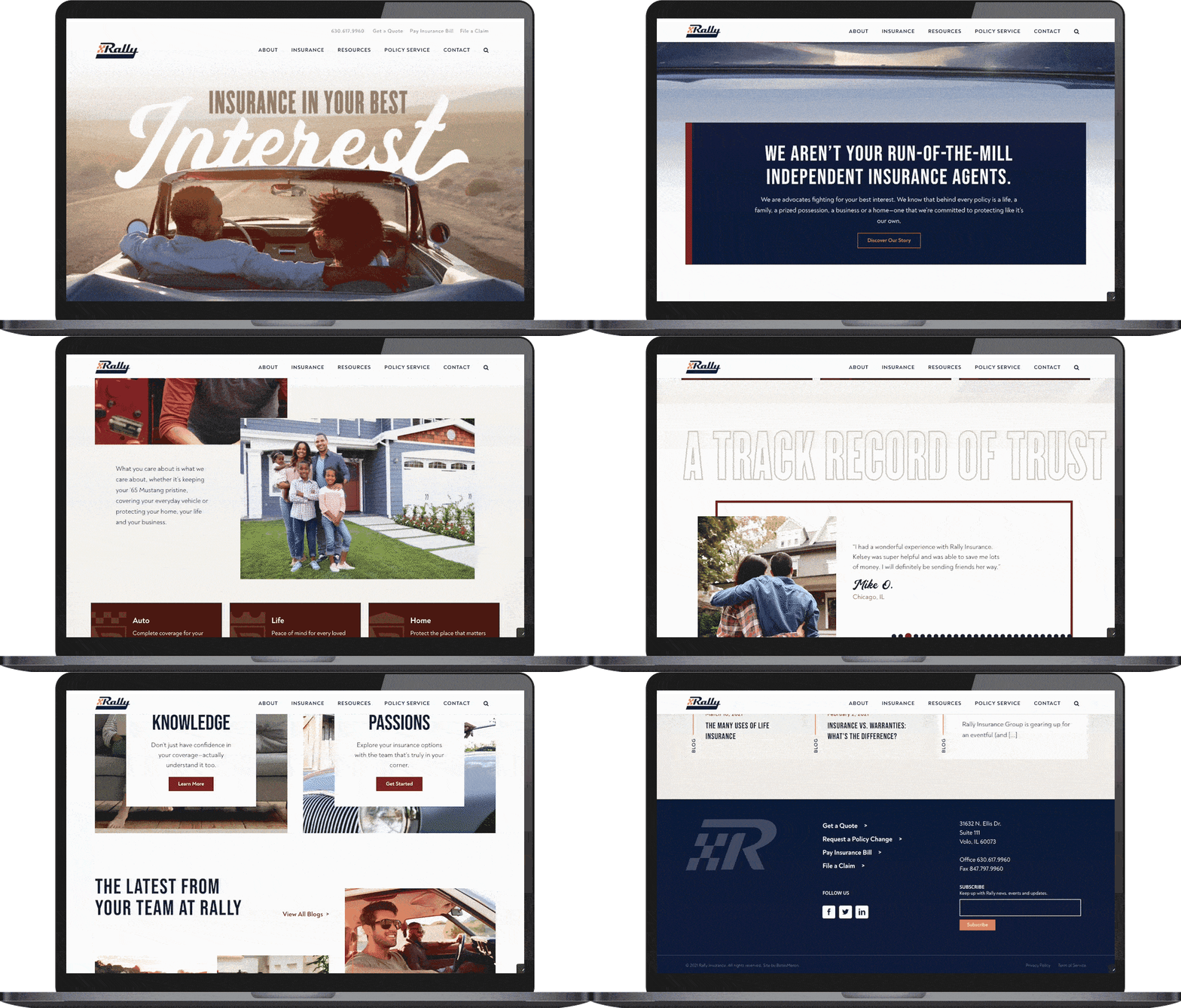
The checkered flag became a more sophisticated element of the visual language. A system of shield icons gave Rally a cohesive way to represent its different insurance offerings. We developed messaging, colors, typography, collateral and a new website that could all work together instead of relying on a logo to carry the entire weight of the brand.
And then came the tagline:
A Track Record of Trust.
It connected Rally’s automotive heritage to something much bigger—and much more important. Trust was the equity Rally had been building all along. The new brand simply gave it a visual and verbal language.
When we presented the branding, Ellen told Clutch that of approximately 15 pages of design, only two things needed adjustment. She also shared something that anyone who has ever presented creative work to a group will appreciate:
“With team members of varying ages, we can’t seem to agree on anything, but when it comes to the design that they sent us, everybody liked what we got back.”
As anyone who has ever presented a logo to a committee knows, I believe this technically qualifies as a miracle.
But I also think it tells us something important about why the work resonated. We weren’t asking Rally to become someone new. We were showing them a version of themselves they recognized.
What this work taught me
It’s easy to think of a rebrand as transformation.
New logo. New colors. New messaging. New website. New everything.
And yes, we created all those things for Rally. But looking back, I don’t think transformation is what made this project successful.
Alignment did.
We aligned the visual identity with the sophistication of Rally’s customers. We aligned the messaging with the breadth of the business. We aligned their collector-car heritage with the larger story they needed to tell. And we created a system that finally reflected the quality of the relationships Rally had already spent years building.
That’s the thing this work reminded me:
Sometimes branding isn’t about changing who a company is. It’s about finally showing everyone who they’ve been all along.

“BatesMeron Sweet Design would spend time to get to know our company in terms of how we approach insurance. They were spot on in interpreting our ideas. With team members of varying ages, we can’t seem to agree on anything, but when it comes to the design that they sent us, everybody liked what we got back. One of the best things is they’ve been great communicators.”
Related Links
Rally Insurance Group Branding, Marketing & Website
–BatesMeron portfolio
Rally Insurance Group Review of BatesMeron
–Hear directly from the President of Rally Insurance Group



Made with ♥ in the 312